Welcome to the 51st investment case, 41st resilience, 28th reshoring/sovereignty and 7th healthcare idea on Crack the Market (and the most comprehensive Danaher investment case you will find online)! Join me as I dissect one of the world’s most disciplined serial acquirers, a high‑quality compounder that has transformed itself into a pure‑play life science tool platform and now sits at the crossroads of bioprocessing, diagnostics and life science innovation, and riding a generational pharma reshoring wave.
Twice a week, I will release deep dives into stocks and sectors that fit into the three themes that I see winning in this age of tariffs and deglobalization: resilience, sovereignty & reshoring, China. I will then deep dive into the opportunities in the AI data center value chain.
Take advantage of this once in a generation opportunity to build long term wealth by investing in great stocks that will deliver returns for your portfolio for years to come.
You can already read my first 50 deep dives, all of which I see as winners in this new world of tariffs and deglobalization:
ASML (reshoring & China idea): The most innovative company in the world will 2.5x its EPS by 2030.
LKQ (resilience idea): The most defensive business in the auto industry is a tariff winner and could become a compounder.
Atlas Copco (resilience, reshoring & China idea): The best industrials business in the world is on sale, extremely resilient and will benefit from US reshoring.
Badger Meter (resilience idea): The perfect business in the perfect end market, water meters are the definition of resilience.
Knorr Bremse (resilience idea): Who knew making brakes was this lucrative? Rerating with self help story and upside from German infra plan.
Flex (reshoring idea): The electronics manufacturing giant building Nvidia’s servers and enabling reshoring is becoming a better business.
Itron (resilience & reshoring idea): Riding the grid investment super cycle and enabling smart grids.
Roper (resilience idea): A resilient cashflow compounder in the software space with inflecting growth.
RELX (resilience idea): The company to own forever – one of the very best businesses on Earth.
CPKC (resilience & reshoring idea): The rail connecting Canada/US/Mexico and benefiting from reshoring.
Novo Nordisk (resilience idea): The most exciting pharma company in the world is misunderstood and its growth engine is ready to roar back to life.
Kurita (resilience, reshoring & China idea): Water services expert with improving margins and benefiting from reshoring of semiconductor production.
Halma (resilience idea): High quality compounder in safety, health and environmental technologies.
Quanta Services (resilience & reshoring idea): Countercyclical compounder riding a multi decade infrastructure buildout.
Infineon (China idea): Power semiconductor leader with strong structural drivers (AI power and China auto) amidst a cyclical recovery.
Hubbell (resilience & reshoring idea): Pure play on US electrification demand driven by AI and grid investment cycle.
Iberdrola (resilience & reshoring idea): Best integrated utility in the world with a stellar track record and solid growth driven by networks and renewables
Nvidia (AI & data center idea): The backbone of the AI world is unstoppable.
Veolia (resilience & reshoring idea): Resource management giant (water, waste, energy) due for a rerating.
TJX (resilience idea): The retail giant that keeps winning.
DSM-Firmenich (resilience idea): The diversified ingredient powerhouse benefiting from a transformational deal.
Zoetis (resilience idea): Leader in animal healthcare.
Prysmian (reshoring idea): Global cable leader entering a golden age.
Bentley Systems (resilience & reshoring idea): The software compounder bringing infrastructure into the AI age.
Givaudan (resilience idea): The highest quality and most resilient ingredient compounder has a compelling valuation.
First Solar (reshoring idea): The rising Sun in a new electricity supercycle.
Arcadis (resilience & reshoring idea): An engineering and design consultancy giant poised for a rerating.
Thermo Fisher (resilience & reshoring idea): Life Science tools giant just had its clearing event and is a stealth reshoring winner.
Nexans (reshoring idea): Electrification pure play with visibility into 2030.
Croda (resilience idea): A covid darling with a ridiculous valuation is at an inflection point.
Copart (resilience idea): One of the best businesses on Earth is being sold off, should you jump in?
Schneider Electric (resilience & reshoring idea): The Electrification champion that keeps compounding.
Cadence (resilience idea): A defensive compounder in the semi space & one of the most profitable software businesses in the world is getting better.
SAP (resilience idea): The unstoppable growth engine behind every business.
FICO (resilience idea): The Score Behind the Score.
Siemens (resilience & reshoring idea): The best conglomerate on Earth is sitting on EUR70bn of optionality.
MP Materials (resilience & reshoring idea): The Western rare earth champion.
Sopra Steria (resilience & reshoring idea): This boring IT business is a hidden Defense and Sovereignty play.
Hoffmann Green Cement (reshoring idea): Cementing a green future.
Oracle (resilience idea): The Oracle of the AI Age.
Dassault Systemes (resilience & reshoring): Why are investors overlooking this Software giant?
Eli Lilly (resilience & reshoring): The best pharma company in the world.
Air Liquide (resilience & reshoring): The ultimate defensive earnings compounder.
CATL (China): The battery titan with electrifying growth.
Broadcom (AI data center): The $1.7tn AI underdog
Siemens Energy (reshoring): All gas (& electricity), no brakes.
Shopify (resilience): How One Platform Took Over Modern Retail.
Trex (resilience): What happened to this Building Products darling?
Salesforce (resilience): Salesforce: A Value Tech Christmas Gift?
Nextera Energy (resilience & reshoring): How America’s Largest Utility Became An Electrification & AI Powerhouse
After reading this article, you will understand why this company is so special thanks to its exceptional serial acquirer track record, what it does, why it is a critical enabler of the entire pharma value chain, why it is at an inflection point and why it remains one of the best businesses to own for the next decade.
In this article, I walk through:
Danaher’s business and how it built a leading Life Science tool portfolio.
Why it is the best positioned Life Science tool company, benefiting from some of the most important structural trends in healthcare and a secret reshoring winner.
How the Danaher Business System and disciplined M&A have allowed it to compound revenues, cash flow and EPS for decades.
Why growth is set to re‑accelerate, with bioprocessing recovering, life sciences stabilizing and a path back to growth and EPS compounding.
How the reset of Danaher’s guidance and the clean‑up of Covid and destocking headwinds sets the stage for a far more attractive risk‑reward over the coming decade.
Danaher Investment Case
Table of content
Business Description
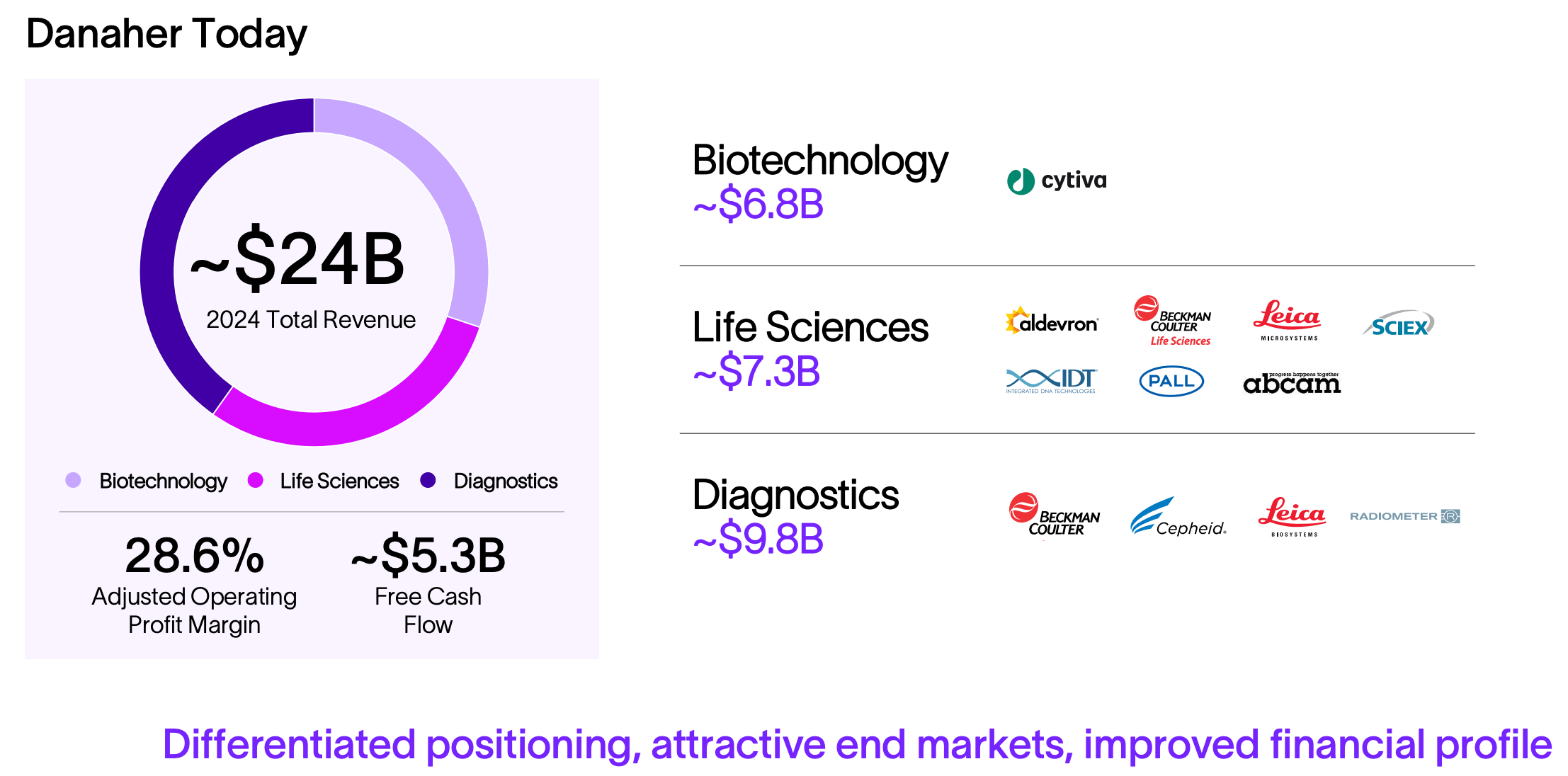
Danaher is a $164bn market cap and $24bn sales global life science tools company that provides a broad range of scientific products and services to a diversified, global customer base of pharmaceutical companies, researchers, and healthcare providers. Danaher provides a wide range of analytical instruments and related consumables across the life sciences industry, bioprocessing solutions for the development and manufacturing of therapeutics, and broad diagnostic offerings.
Danaher is a leading provider across the entire bioprocessing workflow, encompassing both upstream + downstream offerings, deriving approximately 25% of revenues from their bioprocessing solutions ($6bn of sales). Danaher’s bioprocessing portfolio is one of the more attractive secular growth drivers within the business, with management assuming a HSD bioprocessing growth rate in their long-range plan (LRP). Danaher benefits from a strong recurring revenue base, which as of Q3 2025 represented 83% of total revenue, with the remaining 17% tied to instruments.
Danaher has historically grown through selective acquisitions (and disposals) and is currently composed of 15 operating companies with leadership positions in the biotechnology, life sciences, and diagnostics sectors.
Headquartered in Washington DC, Danaher has facilities in more than 50 countries, including 190 significant administrative, sales, research and development, manufacturing, and distribution facilities. 80 out of the 190 (around 42%) are in the US in 20+ states, and 110 are outside the US, primarily in Europe but also Asia, Australia, Canada, and South America. As of the end of 2024, Danaher had 61,000 employees (38% in North America, 32% in Western Europe, 25% in high-growth markets, and 5% in other developed markets).
Revenue breakdown:
By segments: Diagnostics 40%, Life Sciences 30%, and Biotechnology 30%.
By end market: Academic & Government 5%, Pharma & Biotech 37%, Clinical Diagnostics 48%, Industrials & Applied 11%.
By product type: Capital Equipment 19%, Consumables/Services 81% (recurring)
By geography:
Developed markets 71% of revenues (43% North America, 23% Europe)
High growth markets 29% of revenues, China represents 12% of total and is included in High-growth markets.
History of Danaher, one of the US’ best serial acquirers:
Danaher was founded by brothers Steven and Mitchell Rales, who began acquiring real estate and small industrial companies shortly after college. In 1981 they bought their father’s 50% stake in Master Shield, (vinyl siding), then acquired Mohawk Rubber (tires) and control of distressed real estate firm DMG. In 1984 they sold DMG’s real estate and folded Mohawk and Master Shield into their holding company newly renamed Danaher. For the rest of the 1980s they used Drexel junk bonds to fund further acquisitions in tools, machinery, and automotive parts (including Craftsman and Chicago Pneumatic).
In the 1990s they professionalized the firm with an external CEO from GE and the start of what became the Danaher Business System (DBS), based on the Japanese business philosophy of Kaizen (continuous improvement). Danaher’s strategy was to buy underperforming or underappreciated companies with good market shares and recognizable brand names, and then integrate, optimize and grow them by applying DBS. Acquired businesses were grouped into platforms to maximize efficiences and operating leverage, with savings allocated to marketing and further M&A (a full analysis of the DBS and acquisition strategy below),
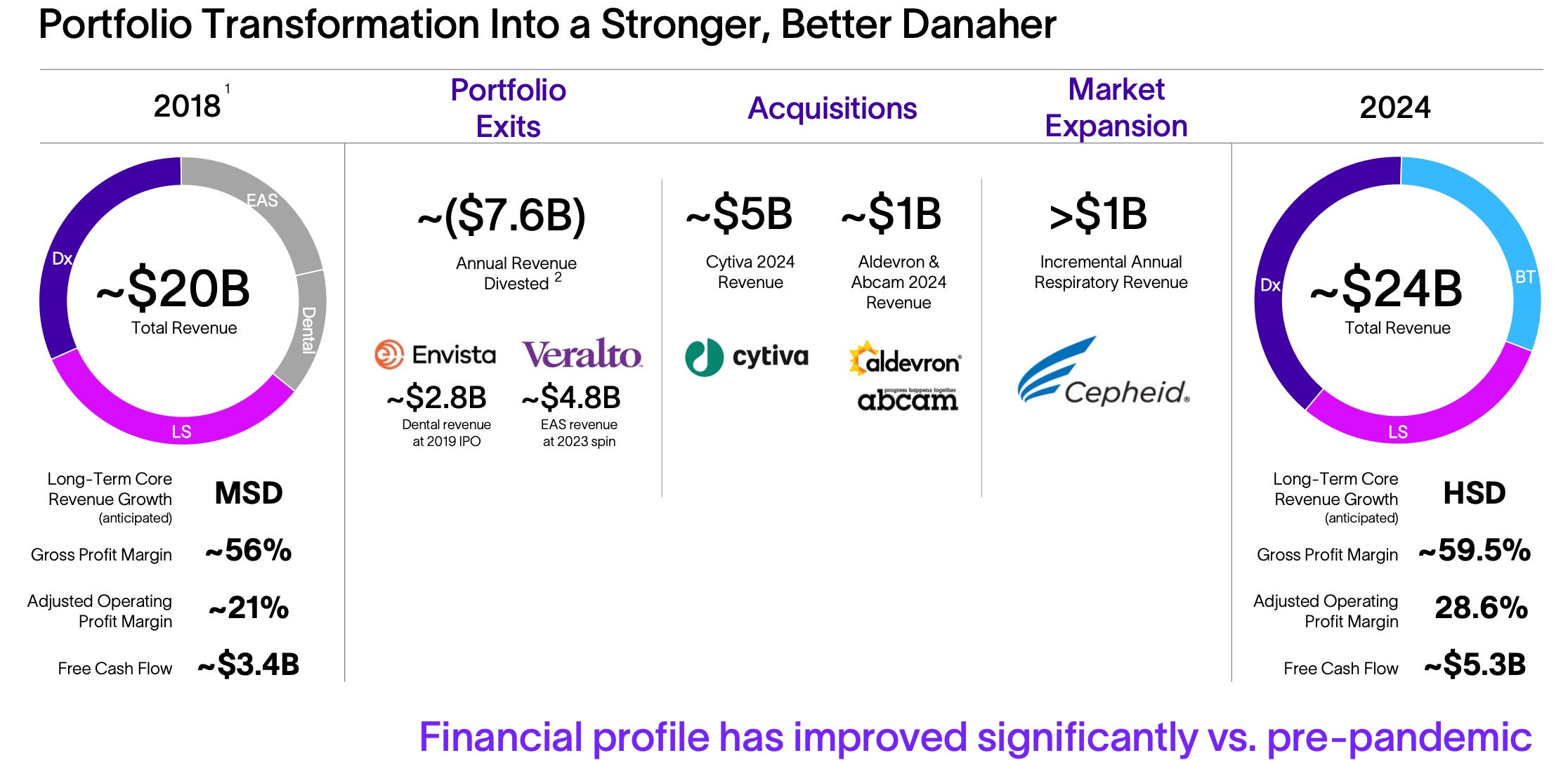
Acquisitions: From its 1980s incarnation as an industrial holding company Danaher has since transformed into a word-class technology provider focused exclusively on life sciences. In its history, Danaher has completed 48 acquisitions with an average acquisition amount of $2.9bn. More than 50% of Danaher’s total revenue today has been acquired in the past decade.
Divestitures: As part of its corporate evolution, Danaher also divests companies or divisions that underperform or no longer align with its evolving strategic focus. In the past ten years it has engineered three public spin-offs of collections of related businesses: Fortive (industrial growth businesses: instrumentation, transportation, industrial technologies) in 2016, Envista (dental businesses) in 2019, and Veralto (Environmental and Applied Solutions segment, water analytics/filtration and packaging/coding businesses) in Q3 2023.
Danaher today has three business segments: 1) Diagnostics, 2) Life Sciences, and 3) Biotechnology.
Diagnostics (40% of revenues, $9bn of sales):
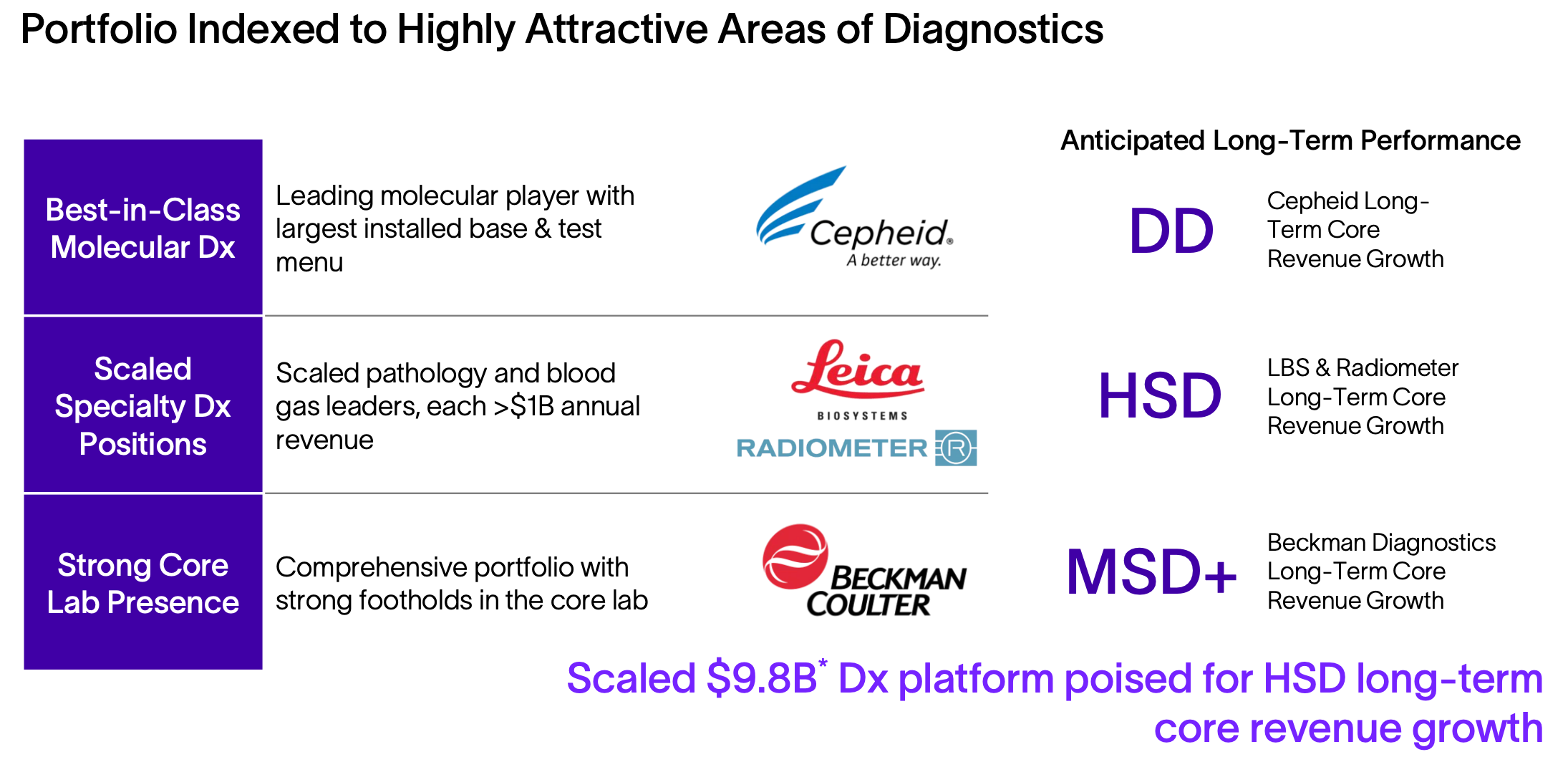
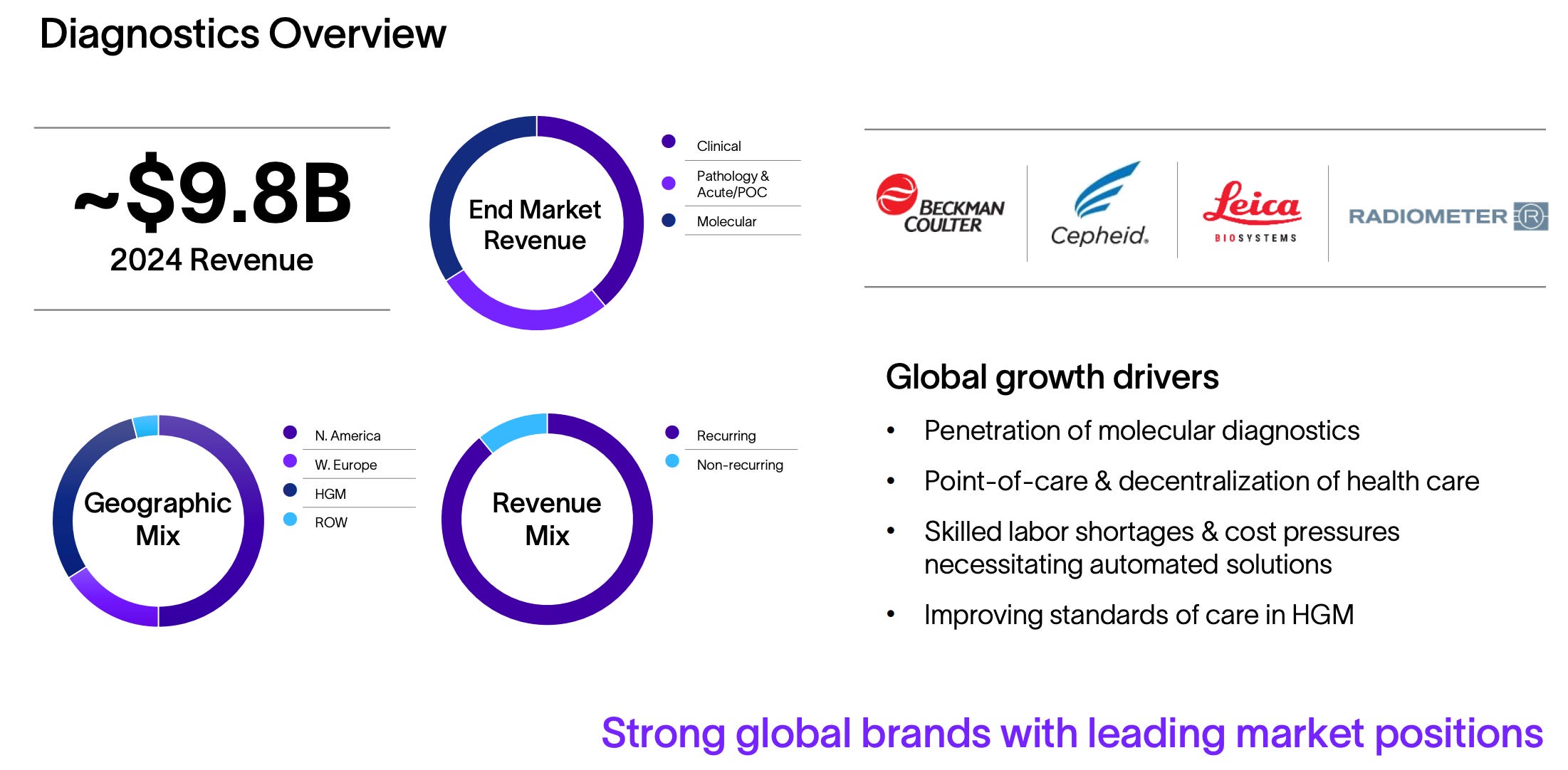
The Diagnostics segment (40% of 2024 revenue) provides clinical instrumentation, consumables and software utilized by hospitals, physicians, reference laboratories and other critical care settings to diagnose disease and make treatment decisions. Their diagnostics solutions help inform treatment decisions for millions of patients every day while automating and streamlining laboratory workflows, so healthcare professionals can provide better patient care.
This division is made up of diagnostic clinical instruments, consumables, software and services used by hospitals, physicians offices, clinics, and laboratories, delivering high recurring revenues.
Products:
1) Core Lab - Clinical (immunoassay systems, hematology products, microbiology, and general automation systems).
2) Molecular Diagnostics (DNA-based testing solutions, including sample preparation and DNA amplification for genetic disease and common applications like respiratory diseases and virology).
3) Acute Care Diagnostics (products for lab/point-of-care settings that measure blood gases, electrolytes, metabolites, cardiac markers, etc.).
4) Pathology Diagnostics (chemical/immunostaining instruments and reagents/consumables, imaging and microscopes/cameras/scanners, storage solutions, slide processing).
Significant Diagnostics Acquisitions:
Danaher established the Diagnostics business in 2004 through the $730m acquisition of Radiometer (leader in blood gas analyzers) and expanded it through multiple acquisitions including:
Leica Biosystems (staining, histology, and digital pathology) in 2005
Vision Systems (automated systems for staining, reagents) in 2006 for $520m
Beckman Coulter (immunoassay and chemistry) in 2011 for $8.8bn.
Iris International (in-vitro diagnostics) and Aperio Technologies (digital pathology) in 2012
HemoCue (blood diagnostic tests) in 2013
Devicor Medical Products (biopsy devices) in 2014
The clinical microbiology business of Siemens Healthcare Diagnostics (bacteria ID and antibiotic susceptibility testing) in 2015
Cepheid (molecular diagnostics: infectious disease) in 2016 for $4bn (in time for Covid)
Life Sciences (30% of revenues, $7.3bn of sales):
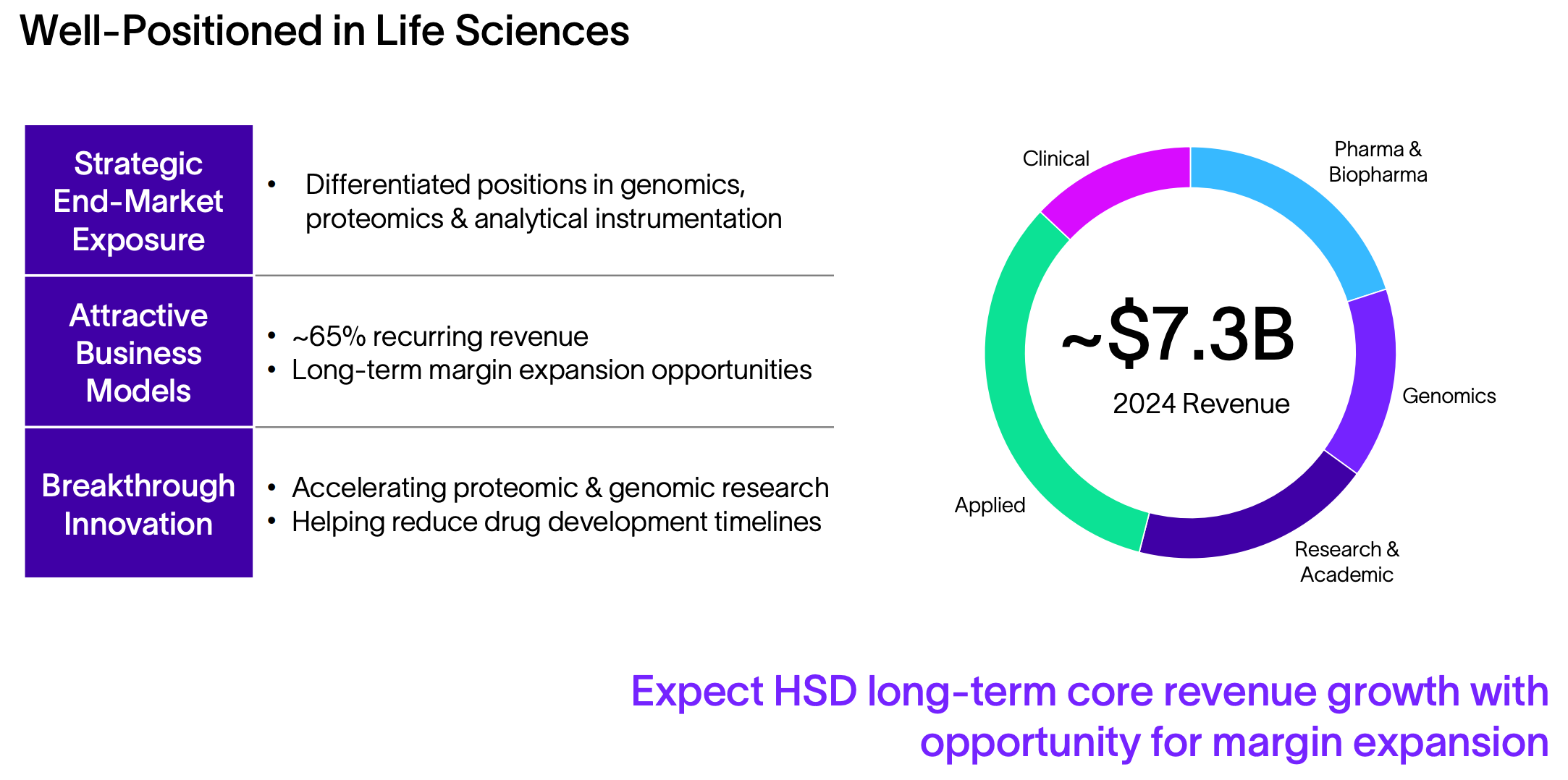
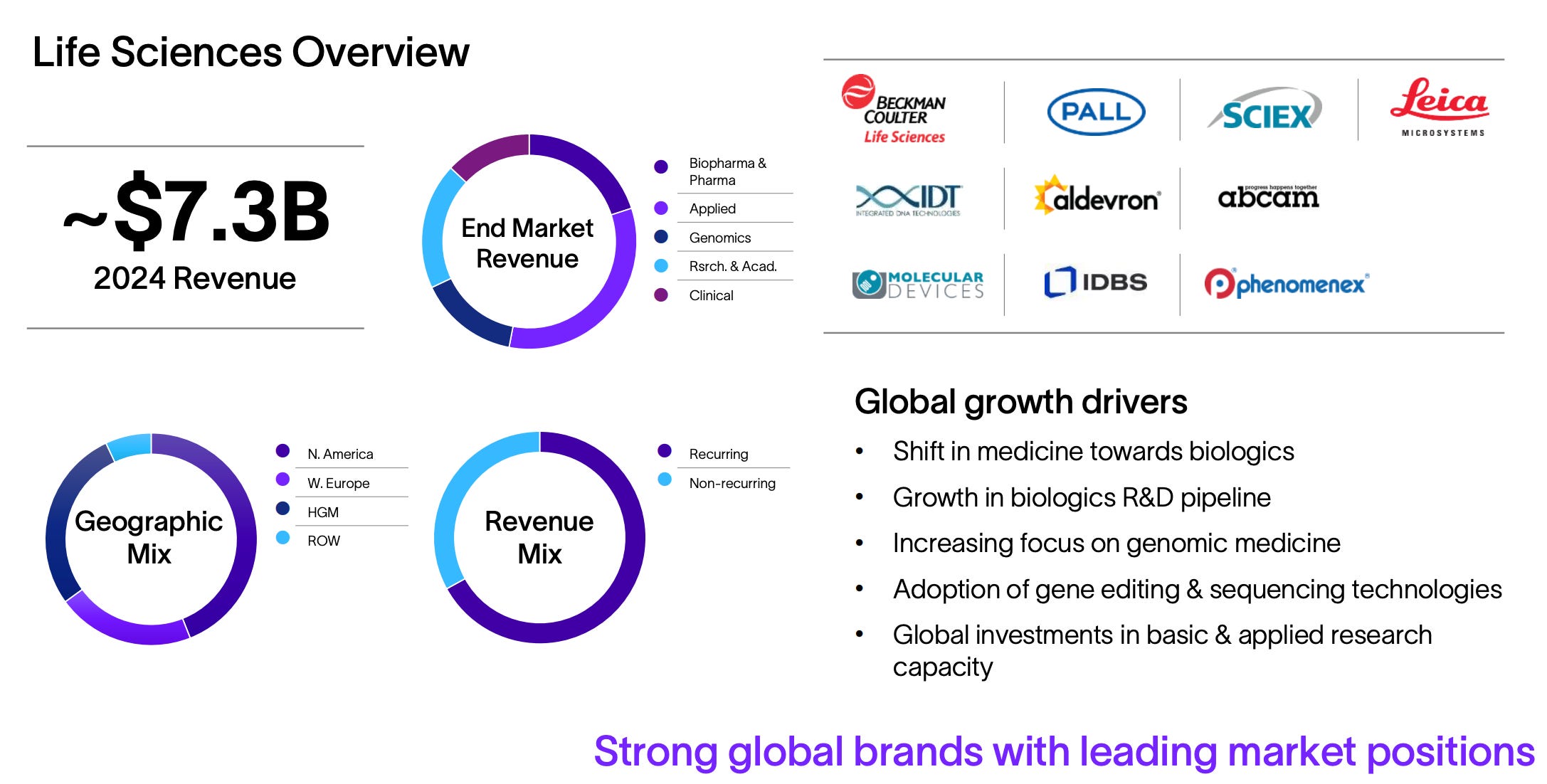
The Life Sciences segment (30% of 2024 revenues) helps scientists around the world that are working to understand the causes of disease, develop new therapies and vaccines and test new drugs. The Life Sciences businesses make this leading-edge work possible. Their capabilities extend beyond research to power the development and commercialization of biopharmaceuticals including cell and gene therapies and other breakthrough treatments to advance patient health and improve treatment outcomes.
This division is made up of instruments, consumables, services, and software used to study genomics and DNA, RNA, nucleic acid, proteins, metabolites, and cells to understand the causes of disease, identify new therapies, and test and manufacture new drugs, vaccines, and gene editing technologies. Also, products and consumables that filter contaminants from liquids and gases for many end-market applications.
Users include pharmaceutical and biotechnology companies, universities, medical schools, laboratories, scientific research institutes, surgical theaters, and in some cases industrial manufacturers and food & beverage and environmental testers.
Products:
1) Flow Cytometry and Lab Automation Solutions (liquid handling automated instruments and consumables, laser flow cytometry, capillary electrophoresis, etc.).
2) Mass spectrometry (mass spectrometers to analyze. compounds and molecules, consumable chromatography columns and preparation solutions, bioanalytical measurement systems, etc.).
3) Microscopy (professional confocal/compound microscopes, surgical microscopes, electron microscopy preparation solutions, etc.).
4) Protein Consumables (a leading supplier in the proteomics market: highly validated antibodies, reagents, biomarkers, and assays).
5) Filtration (filtration/purification technologies and consumables to life sciences and industry).
6) Genomics Medicines (custom DNA/RNA oligos/gene fragments, gene sequencing/genome editing tech, diagnostic raw materials, etc.).
Significant Life Sciences Acquisitions:
Danaher’s Life Sciences segment was established in 2005 with the $550m acquisition of Leica Microsystems (high-precision digital microscopes) then expanded through acquisitions including:
AB SCIEX (a global leader in mass spectrometry Instruments) for $1.1bn in 2010
Beckman Coulter (biomedical analyzers and flow cytometry) for $5.8bn in 2011
Pall Corp (filtration, separation, and purification) for $13.5bn in 2015 and Phenomenex (chromatography columns) for $700m in 2016
IDT (nucleic acid - DNA products) for $2.8bn in 2018
Cytiva (formerly the Biopharma business of GE’s Life Sciences division: cell culture media, chromatography systems, etc. for biopharma companies) for $21.4bn in 2020
Aldevron (nucleic acids and proteins including mRNA) for $9.6bn in 2021
Abcam (antibodies, immunoassays, cell lines) for $5.7bn in 2023
Genedata (biopharma R&D software) in 2024
Biotechnology (30% of revenues, $6.8bn of sales):
The Biotechnology segment (30% of 2024 revenues) provides a comprehensive portfolio of technologies, tools and services that enable pharma + biotech customers to accelerate research & discovery, manufacturing, and delivery of biological medicines. This division is applying science and technology at scale to help scientists accelerate time-to-market, lower costs and improve accessibility to biopharmaceuticals like monoclonal antibodies, mRNA vaccines and cell and gene therapies, changing healthcare as we know it.
It is made up of equipment, consumables, and services that are primarily used to advance the research, development, manufacture, and delivery of biological medicines.
Danaher’s solutions support a broad range of biotherapeutics, including monoclonal antibodies/mAbs (75% of total bioprocessing revenue), recombinant proteins, replacement therapies such as insulin and vaccines, as well as novel cell, gene, mRNA, and other nucleic acid therapies.
Users include pharmaceutical/biopharmaceutical and biotech companies, transnational medicine institutions, academic researchers, diagnosticians, clinics, and contract manufacturing organizations (CMOs): Danaher’s Biotech segments can support biomanufacturers across their workflows from the earliest stages of process development to large scale commercial and turnkey manufacturing.
Offering:
1) Bioprocessing 85 % of revenues(bioprocess chromatography instruments/consumables, cell line and cell culture media, process liquids and buffers for manufacturing, chromatography resins, filtration technologies, single-use technologies, etc.).
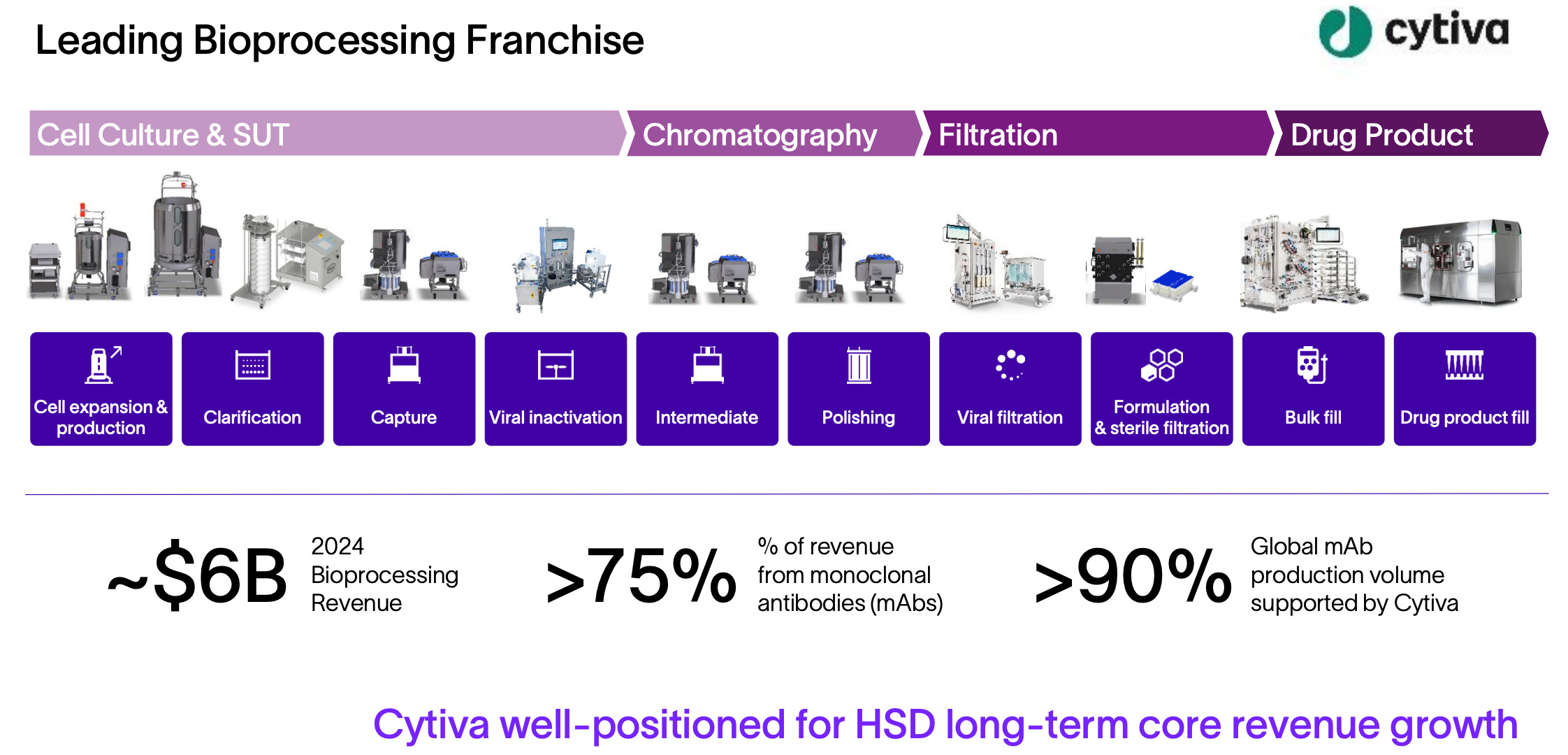
2) Discovery and Medical 15% of revenues (sample preparation and diagnostic assays, lab-scale protein purification and analytical tools, reagents, membranes and services, filtration solutions for drug delivery).
Significant Biotechnology Acquisitions:
Danaher established the Biotechnology segment through the acquisition of Pall in 2015 and expanded it greatly through the acquisition of Cytiva (formerly Biopharma business of GE Life Sciences) In 2020 for $21.4bn (around 17x 2019 EBITDA).